Tuesday, March 18, 2014

Day as a Tourist: Internal tourism

Last weekend I had the unbelievable opportunity of going to the southwestern part of Puerto Rico. Being born and raised in the metropolitan area has limited my interaction with other towns in Puerto Rico. In fact, this road trip was literally my first time in the west side of the island, which is embarrassing coming from the fact that Puerto Rico is barely 100x35 miles squared. However, although it’s a small island, Puerto Rico is distinguished by its magnificent beaches, tropical forests and unbelievable sights.


I started off the day at five in the morning, when a small group of my best friends called me. We had been planning a road trip for a few weeks now; therefore, this was the perfect opportunity for me to visit somewhere completely new and explore it from a tourist point-of-view. My friends got home, picked me up, and we started our road trip towards Cabo Rojo. On our way there, we had the opportunity of admiring the beautiful and breathtaking Puerto Rican countryside; at this point, I was starting to notice the lack of landscapes in the metropolitan area. It took us about two tedious hours to arrive to our destination: Playa Sucia in Cabo Rojo.


Playa Sucia is one of the best beaches in –not only Puerto Rico– but the Caribbean as well. The beach is located at the southwesternmost point of the island, and it’s surrounded by salt flats, hidden caves, limestone cliffs, natural bridges, and exotic fauna. The name of the beach is directly translated to “dirty” in English, which is ironic and somewhat misleading. Playa Sucia has gorgeous teal waters, gentle waves, and warm, white sands. Visitors can enjoy these unmatched Caribbean sights, and escape the busy and distracting modern-day disturbances from the city.


One of the best features of this beach is mainly the fact that there aren’t any oceanfront hotels, bars, restaurants or houses. My friends and I felt in complete bliss, this beach is purely heaven on Earth. Fortunately, we arrived to Playa Sucia very early, around 9am, and the beach was completely quiet and uncrowded, so my friends and I settled in a shady, cozy spot to spend the day. Although we had planned to hike and explore the hidden caves, natural bridges, and rock formations, we stayed in our comfortable spot the whole day, just talking, admiring the view, and overall being lazy. We also dipped into the crystal-clear waters, which was very relaxing.


On top the limestone cliffs, we could enjoy a spectacular view of the Caribbean Sea uniting with the Atlantic Ocean. Unfortunately, my friends and I didn’t get a chance of visiting the famously-known Los Morrillos Lighthouse because it was getting pretty dark by the time we decided to leave. However, the road trip was definitely worth it, my friends and I felt as if we had left Puerto Rico and we were being tourists in a whole new place. I strongly believe you don’t need to travel to other countries to be a tourist, people can simply travel and explore locally, and still enjoy the overall experience as I did.



Monday, March 10, 2014

Traveler or Tourist? "A Room with a View" Reflection

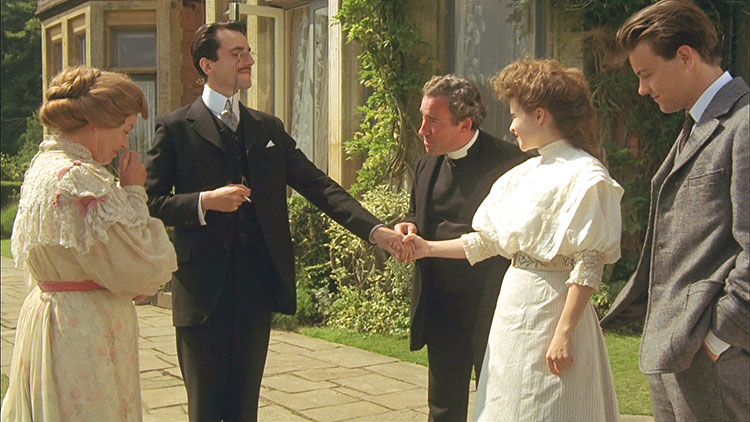
The film A Room with a View, adapted from the novel by E. M. Forster, was released in 1985. This movie follows the story of a young, British girl named Lucy Honeychurch and her uptight, much older cousin and chaperone, Charlotte Bartlett. While on their holiday trip to Italy, Lucy and Charlotte stay at a pensione, where they meet Reverend Beebe, the novelist Miss Eleanor Lavish, Mr. Emerson, and most importantly, his son George Emerson. These people portray the forward-thinking ideals of the time, as Lucy and Charlotte came from the repressive, proper, and conventional English culture. In fact, when Lucy and Charlotte complain about not having a room with a view in Florence, Mr. Emerson offers to change rooms with them; only to come off as strange and tactless. However, throughout their journey to Italy, Lucy and Charlotte have a chance of bonding with the other people from the pensione, specially when they visit the countryside.

It’s during the trip to the countryside where George embraces and passionately kisses Lucy as she approached him in a barley field; Charlotte witnesses the act, and immediately stops the intimacy. Upon returning to England, Lucy accepts a marriage proposal from the wealthy, yet snobbish Cecil Vyse. However, she soon finds out that George and his father move nearby, which disrupts her relationship with Cecil, resulting with Lucy breaking off her engagement. Lucy then makes plans on visiting Greece, and although she wanted peace of mind, Lucy later reunites with George. Towards the end of the film, we see them traveling back to Florence –as the genuine travelers they really are– and staying at the Italian pensione where they first met.

Different quotes and conversations throughout this film convey the qualities of being a tourist and a traveler. In the beginning of the movie, when Lucy and Charlotte are eating with the other English people from the pensione, Eleanor Lavish says one of the most important, yet understated quotes of the movie: “It is only by going off the track that you get to know the country”. This specific quote can easily relate to Jamaica Kincaid’s novel “A Small Place”, mostly because many tourists choose to visit the superficial, exotic and exterior sites when they travel, instead of “going off the track” and actually immersing into the cultures, traditions, history and issues of a country.

Another quote that caught my attention was definitely when Eleanor Lavish told Charlotte: “Smell! A true Florentine smell. Inhale, my dear. Deeper! Every city, let me tell you, has its own smell”. I believe in this moment –right when Eleanor and Charlotte got lost–, they were experiencing and living Florence in a physical and outer aspect; regarding our human senses. Instead of drenching themselves into the raw and realistic Italian culture, Eleanor and Charlotte affirm Jamaica Kincaid’s standpoint of how tourists are often alienated from real issues when they travel to a new country; they are both stereotypical tourists throughout the film. I believe Jamaica Kincaid would respond to the people staying at the pensione with a bitter and angry tone, mostly because their trip affirms her perspective of how tourists are selfish and rude towards the local people, which is perfectly presented when the priest yells at the Italian driver and his girlfriend for showing affection while they were riding the carriage in the countryside. Lastly, the film ends with an open quote, when the girl at the end says: “Don't you agree that, on one's first visit to Florence, one must have a room with a view?” which suggests how tourists are always focused on –not literally the sightings–, but that distant, careless and superficial attribute of the country they’re visiting.

Friday, February 28, 2014

Song of the month - Go Do by Jonsi


"Go Do" by Jonsi is, without a doubt, one of the greatest songs I've ever listened to. Every time I listen to this track, I can't help but visualize myself traveling the world, feeling joyful and carefree. Highly recommend it!  

Sunday, February 23, 2014

Helping - "Down on the Island" by Jim Cooper


The eighth chapter of Jim Cooper’s “Down by the Island”, which is titled “Helping”, narrates the author’s experience with Puerto Rican students cheating on their English tests, but claiming they were basically “helping” each other. The author claims how Puerto Ricans are the friendliest and most hospitable people in the world, which can clearly be seen in how students help their classmates get good grades. This was completely surprising for Cooper, mainly because in the United States, college students were taught to be competitive and ambitious toward others, whereas in Puerto Rico, students took a different and more compassionate approach.

In this chapter, Cooper narrates how Puerto Rican students did not realize the severity and consequences of their actions; what these students called “helping”, was actually cheating. In fact, when Cooper asked students why they were looking at their classmates’ papers, students would genuinely say it was because they were really desperate for the answer in order to get a good grade. However, Cooper also criticizes how teachers and professors promote this kind of behavior in their students.  Tests were specifically made to evaluate students regardless if they dominated the material or not, which actually promoted students to do anything just to receive a good grade.

To prevent “helping”, as Cooper portrays in this chapter, students should be judged on other activities that promote independent thinking, such as group projects, open debates and discussions, and oral presentations. Although tests are important because they measure the student’s capacity of understanding the material, teachers should also implement these other measures and techniques; testing should not be the only system to decide whether students fail or pass a specific course. By valuing independent thinking, rather than testing and grades, students wouldn’t need to cheat or “help” in their college courses.

Teaching English - "Down on the Island" by Jim Cooper

During the 1950’s, a young professor from the United States named Jim Cooper went to the University of Puerto Rico at Mayagüez to teach an English course. As he began teaching in Puerto Rico, Cooper encountered many issues involving the education in “El Colegio”, as locals refer to the UPR Mayagüez. First of all, students didn’t even take English courses seriously, mostly because they underestimated it and thought everyone passed automatically. However, this was completely untrue. Most students didn’t speak English at all, unless they came from bilingual private schools or emigrated from the United States.

This issue clearly portrays Puerto Rico’s political status and educational public system in the 1950’s, mostly because the English language was completely foreign to people who were raised in rural areas of the island. In fact, even English professors didn’t know how to speak English fluently. Many had very thick accents, which made the teaching progress even more difficult for students. Jim Cooper even criticizes when Puerto Ricans mispronounced words, such as “feel” and “fill”, among others.

The process of settling English as a second language in Puerto Rico has improved in the last few decades due to the large amount of exposure from the internet, television, media, social websites, movies, and music. However, the approach for teaching English was completely different in the early 50’s. Therefore, it’s very clear how older generations speak a minimum –or none– English, compared to younger generations who have been exposed to the language from a very early age.

Sunday, February 16, 2014

"A Small Place": Colonialism in the 21st century.

Jamaica Kincaid’s A Small Place is a short and simple-written book narrating her own story as she traveled to her homeland of Antigua.  Inside this exotic and fascinating Caribbean island, Kincaid portrays her bitter and disappointing attitude towards the “new Antigua”. She criticizes the loss of social values and the corruption involving the government and the higher classes in Antigua’s society. Jamaica Kincaid clearly articulates the crisis plaguing other developing nations as well, such as African and Caribbean countries that have yet to overcome issues involving the negative legacies of colonialism and slavery.

The topic of corruption is, by all means, the most discussed and influential topic of Kincaid’s novel. It’s impossible to compare powerful nations such as the United States and Great Britain, to developing countries in South America, the Caribbean, Southeast Asia and Africa. We are currently living in a world where wealthy nations exploit, control and enslave other countries by economic practices instead of using whips and chains. This term, also referred to as “Neo-colonialism”, was coined by Ghanaian president Kwame Nkrumah to describe the economic, social, cultural and political practice of using capitalism, business globalization, cultural imperialism and –international– economic arrangements to maintain colonial control. In other words, the essence of neo-colonialism is that sovereign states, although theoretically independent, are still subjected to economic systems and political policies directed from outside, mostly by powerful and greedy nations.

Despite the decolonization that occurred after World War II (1939-1945) was over, former colonial powers continued to apply economic arrangements with their former colonies to maintain political and economic control. Imperial practices were mostly done by the United States, and the empires of Great Britain, France, and other European countries. However, these practices can also be traced back to the discovery of America, where Spain, Great Britain and Portugal colonized and exploited countries by bringing slavery and taking all the natural resources back to Europe.

Neo-colonialism is also based upon the idea of breaking up large and united territories into small, non-viable states which are incapable of independent development. Therefore, these territories must rely upon imperialist nations for internal security and even international affairs. This idea can be traced to the separation of the former Yugoslavia, Nazi Germany and the Soviet Union, where socialist and communist regimes were in control. It’s no surprise the United States, and other capitalist nations, were involved in these issues. The Cold War between the United States and the former Soviet Union is the perfect example, mostly because it wasn’t a war between two powerful nations, but rather between socialist regimes and capitalist democracies.


Lastly, another facet of neo-colonialism is the disproportionate involvement of multinational corporations in developing countries. Many capitalist businesses invest an immediate and large amount of capital, but instead, these corporations just exploit the natural resources of developing countries. Privatizing and restricting national resources –and their access– has an influential role on local and national scales, such as unemployment and poverty, which results in the underdevelopment of these countries. Therefore, corruption and crimes involving the government of developing countries, such as Antigua in “A Small Place”, isn’t a local issue, but rather a web of economic interests linked to wealthy, imperialist countries. 

Tuesday, January 28, 2014

Hello! And welcome to my blog!

My name's Edgar Guzman, I'm nineteen years old and I live in Caguas, Puerto Rico. I am currently doing a biology major at the University of Puerto Rico, as well as conducting research at the Comprehensive Cancer Center of the UPR Medical Sciences Campus. As a pre-medical student, it's no surprise I have lots of high aspirations and goals in life. However, even though I'm more of a science kind of guy, I'm also very into geography, traveling and history. 


10 places I've traveled to:

U.S. Capitol - Washington D.C.

Santa Monica Pier - Los Angeles, California

*Columbia University - New York City

Curaçao, Dutch Antilles

Six Flags New England - Massachusetts

Aruba, Dutch Antilles

Yale University - New Haven, Connecticut

Culebra, Puerto Rico

Philadelphia, Pennsylvania

St. Thomas, U.S.Virgin Islands


*Columbia University - New York City
Last year I had the amazing opportunity of getting accepted at an internship at Columbia University's College of Physicians and Surgeons. I spent six whole weeks taking medical school level courses, going to conferences related to medicine and public health, and doing clinical rotations in different hospitals throughout Manhattan. However, the most exciting part was the fact that I spent my whole summer living and breathing New York City. Although I've been to the city plenty of times before, it was always for a limited amount of time, so this internship gave me the opportunity to become independent and self-sufficient. I was able to learn about the people, culture and diversity of New York, which made me fall in love with the city. I really wouldn't trade my experiences last summer for anything in the world. I could definitely see myself living here in the future.